

FTPP funds student’s science development as he explores plasma’s effect on lab-grown cancers
Treating the media in which laboratory cancer cell lines grow with highly energized gas called cold plasma has a beneficial effect on therapies used fight the disease, according to basic research by an Auburn University (AU) undergraduate student that was accepted by the American Association for Cancer Research (AACR) for its annual meeting.
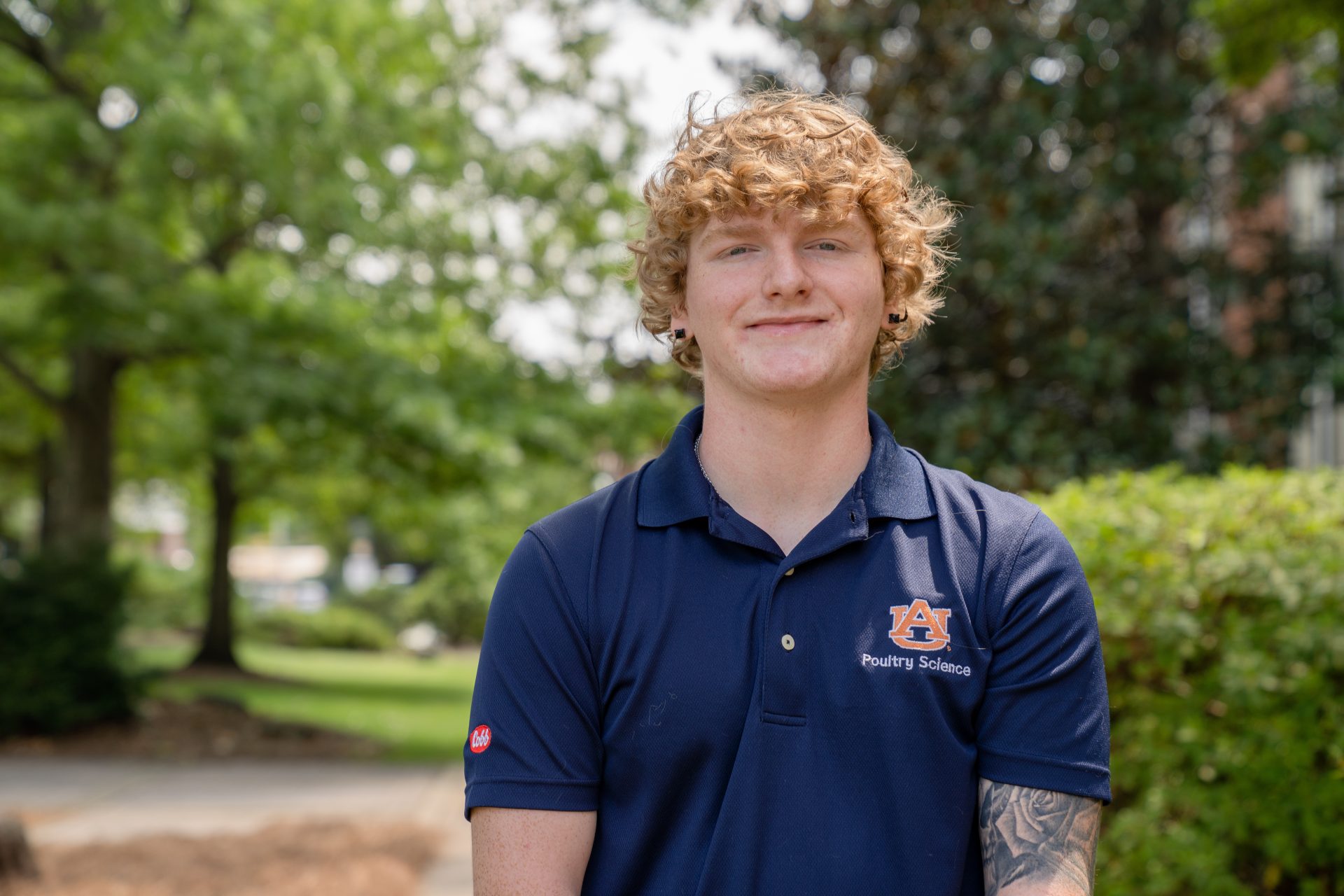
Jakob Doster, a junior in the Department of Poultry Science, plasma-treated cell culture medium and then introduced a variety of cancer cell lines, including common breast and prostate cancers, into the medium along with different concentrations of chemotherapeutics.
The work shows that when the highly energetic ions of cold plasma bombard the cell culture medium, they create reactive oxygen and nitrogen species that generate an oxidative stress on the cancer cells, says Dr. Amit Morey, one of Doster’s research advisors and an associate professor of poultry science.
“This increases the susceptibility of the cancer cells to chemotherapeutic agents,” says Dr. Morey. “In theory, if these cells are damaged, we will need lesser amounts of chemotherapeutic agents, and that will help reduce the side effects of these drugs.”
scientific develoPment
Equally important, the work was a decisive step in Doster’s education and in his scientific development.
“What this project has taught me is that research is truly about trouble shooting, critical design and above all else, patience,” Doster says.
“Many of our trials behaved quite differently than we expected and there were many instances where experimental design had to be tweaked in order to remove variables we hadn’t previously considered,” he says. “Even after getting everything right, though, the surface results were still rather unexpected.”
Acceptance of his work by the AACR is a huge accomplishment for Doster, says Dr. Morey.
“It is his first-ever abstract and first-ever scientific conference,” Dr. Morey says. “This will set the tone for his career.”
The research was funded by Future Technologies & enabling Plasma Processes (FTPP), a $20 million grant from the National Science Foundation through its Established Program to Stimulate Competitive Research. Managed at The University of Alabama in Huntsville, the grant supports a collaboration of nine statewide universities and a research organization dedicated to plasma research, commercialization and the establishment of a plasma workforce in Alabama.
“The findings from the research were pretty interesting and profound,” says Dr Morey. “Most importantly, cold plasma treated medium with lower amounts of chemotherapeutics killed cancer cells. The higher the plasma exposure time, the higher the kill.”
However, the scientists also observed that normal cells were equally affected by the treatments, indicating a need to further investigate different plasma generating conditions to reduce the side effects on normal cells.
Because Doster is a highly active undergraduate researcher, Dr. Morey says that giving him an experience to work at the AU College of Veterinary Medicine with researcher Dr. Satyanarayana Pondugula on a cross-cutting technological advancement provided him an opportunity to expand his scientific vision for his career.
“Jakob has been an integral contributor to a highly collaborative research project. He is disciplined, dependable, and an effective communicator,” says Dr. Pondugula, a professor of veterinary anatomy. “These qualities have been instrumental in coordinating team members and keeping the project moving forward.”
He says that Doster is highly personable and collaborative and interacts in thoughtful, respectful and productive ways. Doster says the experience vastly widened his view of the role of a scientist.
“This experiment has strengthened my ability to interpret data, as well as to accept the data for what it is rather than to expect a certain result,” Doster says. “I have become far more comfortable with the uncertain nature of research, and I’ve come to see the true importance of repetition, maintaining variables and how documentation is used to produce reliable conclusions.”
Doster is working toward becoming a scientist at a veterinary school after obtaining Doctor of Veterinary Medicine and Doctor of Philosophy degrees.
methods and techniques
“He was exposed to scientific methods and techniques,” Dr. Morey says. “He learned cell culture techniques, as well as treating cell culture medium with a handheld plasma machine. His scientific writing skills were enhanced during the abstract preparation phase.”
Dr. Morey provided guidance on the application of plasma while Dr. Pondugula took the lead on training Doster on cancer research. Dr. Pondugula instructed Doster on cancer biology and guided him through the research project, creating an environment for Jakob to be inquisitive and creative.
“We mentored him through several stages of the research project, including designing and troubleshooting experiments, calculating anticancer drug concentrations, setting up and conducting cell viability assays, analyzing the data and documenting the results,” says Dr. Pondugula.
“In our lab, my colleague Xu Chuanling, who is known as Ms. Lynn, has played an important role in helping Jakob and other team members,” he says.
“Jakob learned how to culture both normal and cancerous prostate and breast cells using appropriate media and supplements,” Dr. Pondugula says. “He also learned how to perform cell viability assays to evaluate the effects of cold atmospheric plasma, alone as well as in combination with chemotherapy drugs, on normal and cancerous breast and prostate cells.”
Doster says, “Overall, this project has shifted my mind from ‘doing research’ to ‘asking questions.’ It has made me much more detail-oriented, as well as curious about other complex scientific topics, while further reinforcing my interest in research as part of my future career.”