

Ph.D. student at Auburn University led her team to 2nd place in Hygienic Design Competition with an innovative cold plasma solution
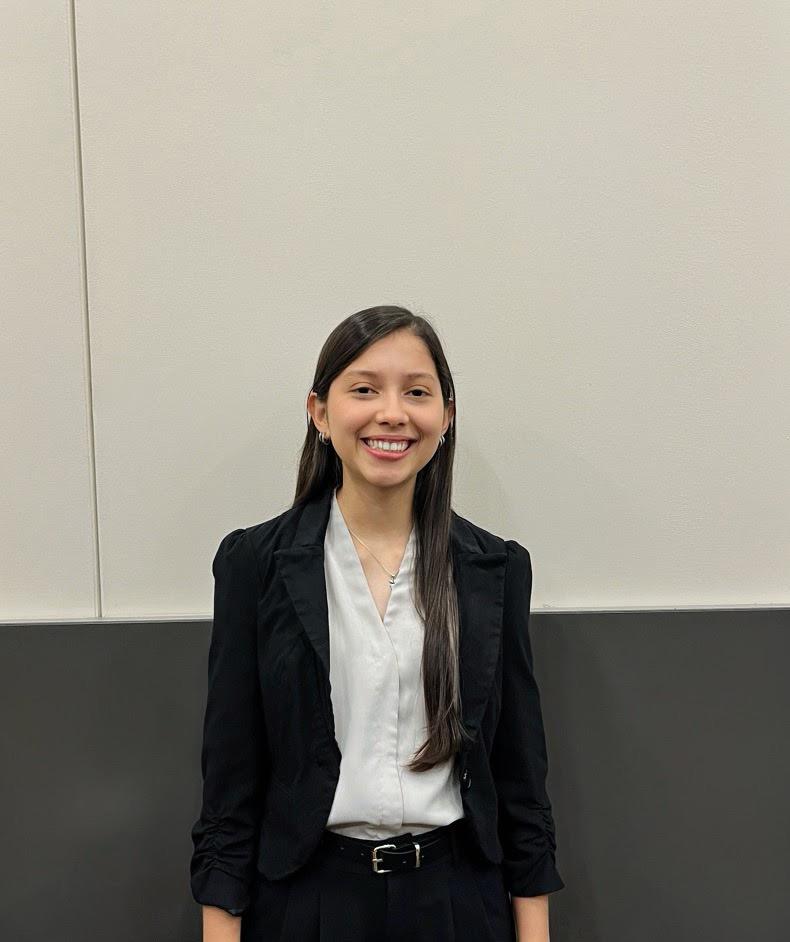
Katherine Sofía Sierra Meléndrez, Auburn University Ph.D. student, helps lead her team to second place in the 3-A SSI 2026 Student Hygienic Design Competition. This competition highlights innovative solutions to improve food safety and sanitation in processing systems.

Katherine, a second-year doctoral student studying Food Science in the Department of Poultry Science, collaborated with teammates Vianca Tashiguano and Telah Black (shown in the accompanying image) to develop a new approach to one of the food industry’s most persistent challenges: safely removing dry powder residues from processing equipment without introducing moisture.
The competition brought together students from around the world, tasking students with designing practical, real-world solutions that enhance hygienic design. Sierra’s team focused on the milk powder industry, where residue buildup in complex piping systems can harbor dangerous pathogens such as Salmonella spp. and Cronobacter sakazakii, both capable of surviving in low-moisture environments and bringing serious health risks.
Their proposed solution uses an innovative cold plasma–assisted dry sanitation system. By combining turbulent airflow with plasma-generated reactive oxygen and nitrogen species, the system is designed to both physically remove powder buildup and inactivate harmful microbes. This dual-action approach not only improves cleaning efficiency but also reduces contamination risks, all while maintaining a completely dry process, which is critical in industries like milk powder production.
The project moved quickly from concept to competition submission, launching in December 2025 and progressing through development, mentorship feedback, and final proposal delivery by March. Sierra has experience with cold plasma technology, she developed research for over five years through the NSF-funded FTPP program.
While still in the early stages, the team’s design shows strong potential for real-world application. With further testing and validation, their cold plasma system could offer a scalable, cost-effective alternative to traditional dry-cleaning methods, transforming hygienic practices across powder processing industries.
Watch the explanatory video that the team presented in the competition below!